
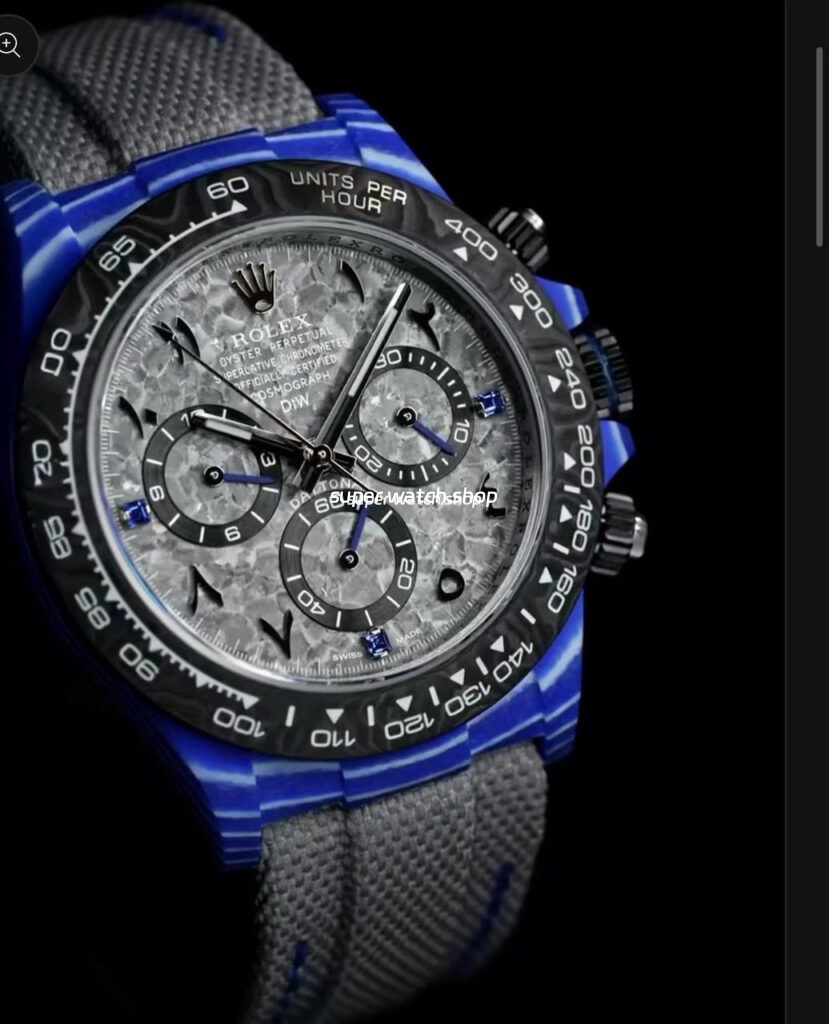
The core of the manufacturing process for high-end Replica watch lies in 1:1 reverse replication, using the original product as a template throughout the entire process, aiming for a high degree of similarity in appearance and certain functions. The complete process can be divided into the following key stages: 1. Template collection and data modeling before mold opening. This is the core step that determines the similarity of the replica and forms the foundation of “1:1 replication”.
Genuine product disassembly: The manufacturer will purchase genuine watches of the corresponding model and completely disassemble them, separating all components such as the case, bezel, crystal, movement, dial, hands, strap, and so on.
3D scanning and data extraction: Each component is scanned using a high-precision 3D scanner, achieving an accuracy within 0.01mm, to generate a 1:1 digital model. Precise data collection is carried out for subtle structures such as the curvature of the watch case, the tooth pattern of the bezel, and the texture of the dial.
Mold Making: Based on the digital model, steel molds are crafted. Metal components such as watch cases and bezel rings are produced using die-casting or stamping molds, while screen printing templates are created for the printed patterns and logos on the watch dial, ensuring that the shape of each component is identical to the original.
- Production and Material Selection of Components: High-end replica watches deliberately imitate the materials of genuine products to enhance the similarity in appearance and texture. For the case and bezel: If the genuine product uses 904L stainless steel (such as some Rolex models), the replica watch will also adopt the same type of steel, undergoing processes like polishing and brushing to restore the metallic luster and tactile feel of the genuine product. If the genuine product features a ceramic bezel (such as a diving watch), the replica watch will use ceramic material, colored and polished to mimic the color and wear resistance of the ceramic bezel.
Watch glass: Sapphire glass is uniformly used, with some being treated with anti-reflective coating, achieving transparency and wear resistance close to that of genuine products.
Dial and Hands: The dial is made of copper substrate, with the scale, LOGO, and text font reproduced through screen printing, and even imitating the authentic luminous coating (such as Swiss Super-LumiNova luminous material). The hands are made of metal, polished and plated to imitate the shape, thickness, and luster of the authentic product. High-end replicas pay attention to the bevel treatment of the hand tips (approaching the authentic 45° bevel).
Movement: This is where the core difference lies between replica watches and genuine ones. However, high-end replicas strive to optimize: basic movements often adopt domestic Mingzhu or Haiou movements, or imported Japanese Citizen or Swiss ETA movements (mostly from non-official channels). Some manufacturers will “modify and replicate” the basic movements, such as replacing the bridges, adding decorative patterns (such as Geneva stripes or fish scale patterns), and even mimicking the functional layout of genuine movements, making them visually highly similar to genuine ones. However, there is still a gap in internal structure and stability. - Assembly and detail polishing: The assembly process emphasizes detail matching to enhance overall similarity. Pre-assembly of components: First, pre-assemble the watch case, bezel, crystal, etc., checking for uniform gaps (high-end replicas are controlled within 0.3mm, striving to approach the 0.1mm standard of the genuine product).
Assembly of movement and dial: Install the modified movement into the watch case, secure the dial and hands, ensuring that the hands do not rub against the dial when rotating. Try to mimic the original product in terms of the position of the calendar window and the alignment of the font.
Assembly of strap and clasp: The strap is made of stainless steel or leather material, and the LOGO engraving on the clasp should be as clear as possible, mimicking the opening and closing feel of genuine products.
Post-production polishing and inspection: Fine polishing is applied to the edges and corners, as well as the brushed areas of the watch case, to remove any burrs. Some manufacturers may conduct a basic waterproof test (mostly for daily water resistance, which is difficult to meet the professional waterproof standards of genuine products). - Core Pain Points and Technological Limitations Despite the seemingly perfect technology, replica watches always have inherent limitations that cannot be overcome: Movement Performance: No matter how much modification is made, the precision, stability, and durability of replica movements are far inferior to those of genuine movements, and they lack the core patented technologies of the genuine products.
Micro craftsmanship: Genuine products feature beveled edges on the hands, special ink on the dial font, and deep engraving of the crown LOGO, which are difficult for replica watches to fully replicate. When magnified, the details and flaws become evident.
Quality control standards: Replica watches are mostly produced in underground factories, lacking the strict quality control processes of genuine products, resulting in significant quality variations between different batches.
It should be emphasized that no matter how exquisite the replication craftsmanship is, replica watches are essentially counterfeit products, and their production and sale infringe on the intellectual property rights of the brand, posing serious legal risks.